
Registry band hai ya nahi? Here is what is verified about registry in Delhi’s 1,511 PM-UDAY colonies, the CD and Authorisation Slip rules, the 31 January 2027 deadline, and what buyers, sellers and owners should do now.
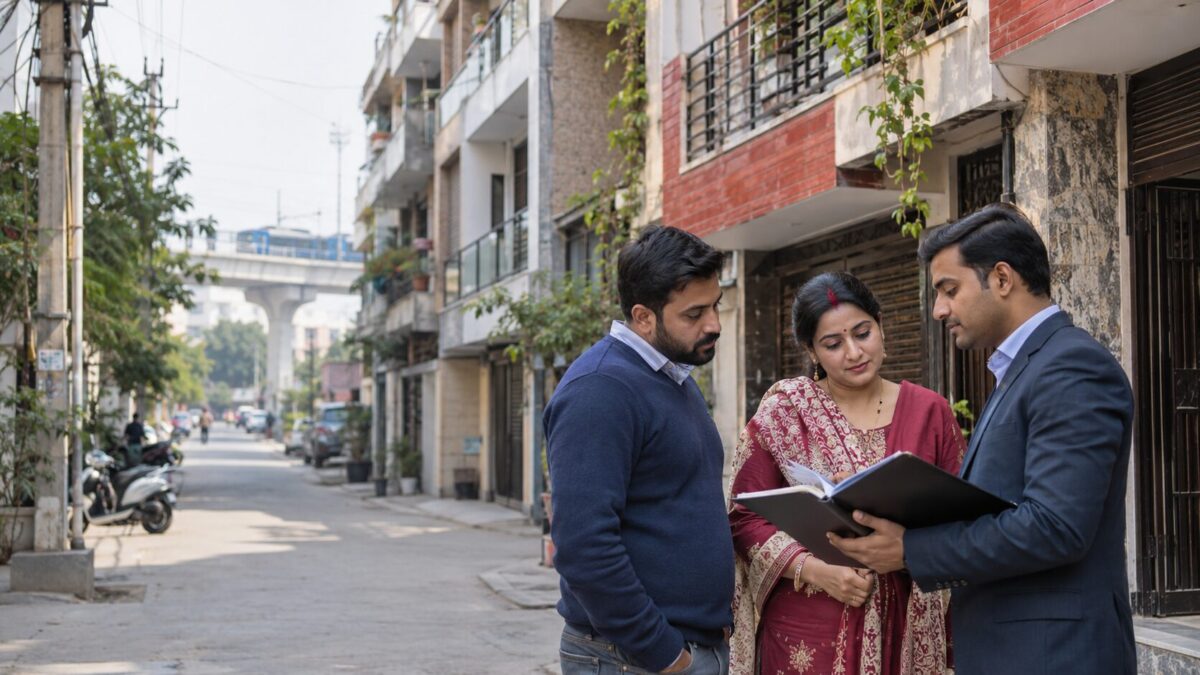
The answer in 30 seconds
The biggest question in Delhi real estate this November is: has property registry stopped? If you are buying or selling in Janakpuri, Uttam Nagar, Dwarka Mor or anywhere in West Delhi, this guide is for you. It explains in simple words what is verified and what to do next.
First, the direct answer. There is no official order or verified report available (is baare me abhi tak koi official order / verified report available nahi hai) saying that normal sale-deed registration is permanently banned in Delhi. We also found no official order that clearly restarts normal registry in all PM-UDAY colonies.
What is verified is this: in the 1,511 notified PM-UDAY colonies, registration practice is now tightly linked to PM-UDAY documents. A normal sale deed alone is not enough. That is why buyers, sellers, builders and lawyers are facing delays and uncertainty. [Source: MCD Online]
This guide uses only official sources (DDA, MCD, Delhi Revenue Department, Gazette) and high-authority national news. Where verified information is not available, we say so clearly.
In short: do not panic, verify. First check your colony status, the type of land (government or private) and your PM-UDAY application status.
PM-UDAY stands for Pradhan Mantri - Unauthorised Colonies in Delhi Awas Adhikar Yojana. It was launched in 2019 to give ownership rights to people living in Delhi's unauthorised colonies. [Source: DDA]
In simple words: many residents in these colonies hold only a GPA, agreement to sell, will or possession papers. PM-UDAY aims to turn these informal papers into a recognised ownership document, so the owner can legally sell, transfer or mortgage the property.
Different numbers are circulating on social media and WhatsApp. Here is the official picture:
| Number | Meaning |
|---|---|
| 1,731 | Total unauthorised colonies originally covered under PM-UDAY [Source: DDA] |
| 1,511 | Colonies notified in the DDA notification dated 8 April 2026 for as-is-where-is regularisation [Source: DDA Notification] |
You may also have heard the number 1,571. It has no official source, so do not use it. The correct official figure is 1,511.
Tip: always check that your colony is on the official notified list. Do not rely only on what a dealer says.
Under the revised process, ownership is established through one of two documents:
| Document | When it applies |
|---|---|
| Conveyance Deed (CD) | When the land is government land |
| Authorisation Slip (AS) | When the land is private land |
In these 1,511 colonies, a normal sale deed alone is no longer treated as sufficient for regularisation. Ownership is established on the basis of the PM-UDAY CD or AS. [Source: MCD Online]
This is why registry gets stuck (registry kyu ruki): if the seller does not have a PM-UDAY CD or AS, the buyer may face problems getting a normal registry done. Banks also generally ask for clear, registered title, so a home loan plan can stall too.
The revised application process started on 24 April 2026 through the Swagam-linked system. [Source: Times of India]
Is registry permanently banned? There is no official order or verified report available on this. All we can say is that registration practice is now linked to PM-UDAY documentation.
| Date | What happened |
|---|---|
| 6 April 2026 | Gazette notification sets the PM-UDAY regularisation framework [Source: eGazette] |
| 8 April 2026 | DDA notification lists 1,511 colonies for as-is-where-is regularisation [Source: DDA Notification] |
| 24 April 2026 | Revised PM-UDAY application process starts through the Swagam-linked system [Source: Times of India] |
| 31 May 2026 | Demolition begins in Shalimar Village after a court-upheld land-acquisition claim |
| 30-31 Oct 2026 | Delhi Revenue Department extends the deadline from 31 Oct 2026 to 31 Jan 2027 [Source: Hindustan Times] |
| 19-20 Nov 2026 | MCD Standing Committee clears a 75% cut in regularisation charges [Source: India Today] |
| 31 Dec 2026 | Due date for the special-protection regime for pre-June 2014 unauthorised construction to lapse [Source: Hindustan Times] |
The impact is different for different people:
Buyer
Seller
Builder and Dealer
Lawyer and Document Writer
Existing Owner
Demolition began in Shalimar Village on 31 May 2026. It followed the Delhi High Court and the Supreme Court upholding a decades-old land-acquisition claim for road expansion. This shows one important thing: PM-UDAY documentation does not automatically protect a property where the land title or acquisition is adverse.
The special-protection regime for pre-June 2014 unauthorised construction in Delhi was due to lapse on 31 December 2026. Local bodies were seeking a 3-year extension, because without it lakhs of buildings could face punitive action. [Source: Hindustan Times]
This is not the story of every colony or every property. Each property's land status is different. So the answer is verification, not panic.
There is good news too. On 19-20 November 2026, the MCD Standing Committee cleared a 75% reduction in property regularisation charges for residents of the 1,511 colonies. [Source: India Today]
This can make regularisation cheaper for many families. Always check the official MCD notice for final rules and applicability.
The deadline has also been extended to 31 January 2027. The Delhi Revenue Department extended it because very few applications came in. [Source: Hindustan Times]
For buyers
For sellers
For builders and dealers
For existing owners
| Term | Meaning |
|---|---|
| CD | Conveyance Deed: ownership document for government land |
| AS | Authorisation Slip: ownership document for private land |
| GPA | General Power of Attorney: a paper that lets someone act on the owner's behalf |
| As-is-where-is | Regularising the property in the condition it is in |
| DDA / MCD | Delhi Development Authority / Municipal Corporation of Delhi |
There is no official order or verified report available that says normal sale-deed registration has been permanently banned across Delhi. There is also no order we could find that expressly restarts normal registries in all PM-UDAY colonies. What is verified is that in the 1,511 notified colonies, registration practice is now tightly linked to PM-UDAY documents (CD or AS). [Source: MCD Online]
PM-UDAY stands for Pradhan Mantri - Unauthorised Colonies in Delhi Awas Adhikar Yojana. It was launched in 2019 to give ownership rights to residents of unauthorised colonies in Delhi. [Source: DDA]
Originally 1,731 colonies were covered. The DDA notification dated 8 April 2026 lists 1,511 colonies for as-is-where-is regularisation. There is no official source for 1,571, so do not use that number. [Source: DDA] [Source: DDA Notification]
A CD establishes ownership where the land is government land. An AS is used where the land is private land. [Source: MCD Online]
Under the revised process, a normal sale deed alone is no longer treated as sufficient for regularisation. Ownership is established through the PM-UDAY CD or AS. For your specific deal, confirm with the sub-registrar office or a Delhi property lawyer. [Source: MCD Online]
The Delhi Revenue Department has extended the deadline from 31 October 2026 to 31 January 2027. No CD or AS will be issued for applications received after the cut-off. [Source: Hindustan Times]
Yes. On 19-20 November 2026, the MCD Standing Committee cleared a 75% reduction in property regularisation charges for residents of the 1,511 colonies. Check the official MCD notice for final applicability. [Source: India Today]
Check the DDA notification dated 8 April 2026 and the official PM-UDAY portal for the notified colonies. Do not rely only on a dealer or a WhatsApp message. [Source: DDA Notification]
Not in every case. Demolition began in Shalimar Village on 31 May 2026 after the Delhi High Court and the Supreme Court upheld a decades-old land-acquisition claim for road expansion. So if the land title or acquisition is adverse, PM-UDAY documentation alone does not protect a property.
That protection regime was due to lapse on 31 December 2026, and local bodies were seeking a 3-year extension because without it lakhs of buildings could face punitive action. [Source: Hindustan Times] This blog has no verified information on the final extension decision, so check the official notice.
Banks generally look for clear, registered title. Before paying token money or an advance, get written confirmation from your lender on whether it will finance that property based on its documents.
Only official and high-authority sources were used in this guide:

Written by Parveen Singh
Parveen is a digital marketing professional at RED Real Estate Developers. He writes about buying property in West Delhi, from Uttam Nagar to Dwarka Mor.
This is general information, not legal advice. Consult a Delhi property lawyer for your specific case. Laws, notices and deadlines can change, so verify with the official sources above before you pay. Last reviewed 27 November 2026.
If you are buying property in Janakpuri or West Delhi, check the PM-UDAY status first. Send us your area and budget on WhatsApp and we will share available options along with their document status. For any property, have your own property lawyer check the documents.
Flat purchase in Delhi requires one to manage three piles of papers – yours, seller’s, and deal’s. The below mentioned is the list of all the documents from token money to registry for resale, builders, and DDA flats.
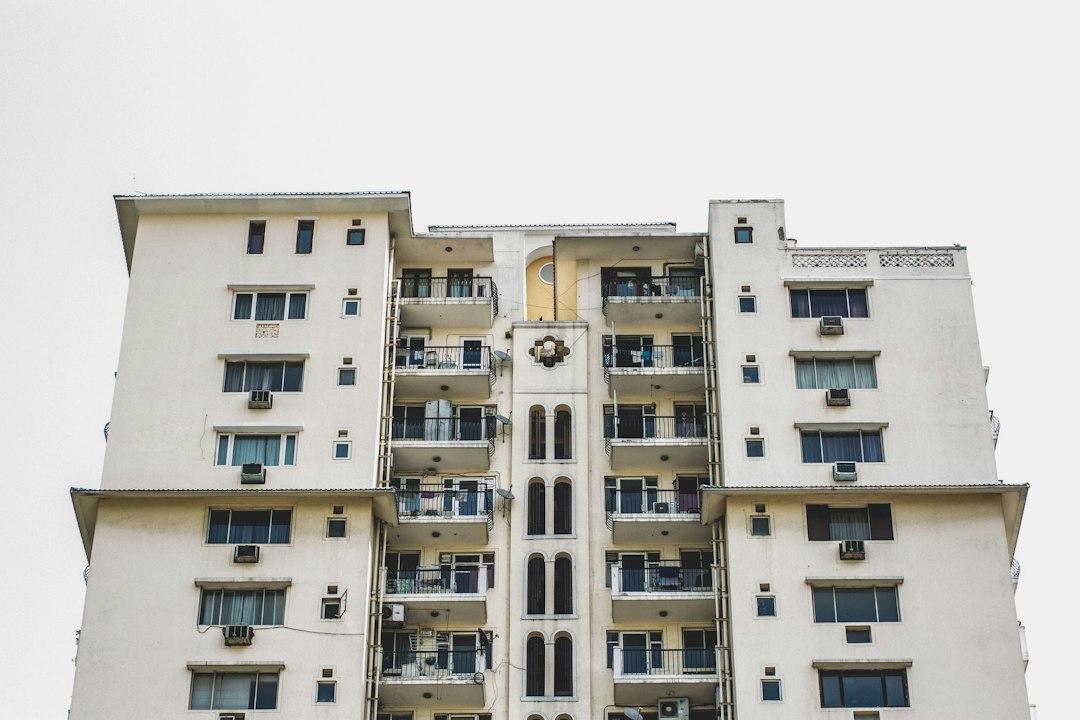
Looking for the papers needed to buy a flat in Delhi? Here is the truth: there aren’t three types of papers but three types of piles, and a deal doesn’t feel right until all three are sorted out.
Your pile: ID, PAN, photographs, perhaps even your income certificate. The seller’s pile showing his/her eligibility to sell you the flat. And then there is the pile which you accumulate while dealing: agreement, your payment cheques, sale deed, and the receipt from the Registry Office. Miss out on any one, and you will know it later—usually at the worst possible time.
This paper deals with each pile individually first, and then each flat individually because a resale builder floor in Uttam Nagar, a new builder flat, and a DDA flat are not exactly the same and do not necessarily require the same documents. This paper addresses the buyers in Delhi, considering West Delhi colonies such as Uttam Nagar and Dwarka Mor. In case you are still choosing the locality, start with our buying guide for flats in Delhi.
The short version
Here’s the whole checklist in one go:
It’s like a relay race in which your papers take you from the bank to the Sub-Registrar’s office. Papers of the seller prove that he owns the flat and is authorized to sell it. Deal papers show the price and terms of the deal and prove its validity.
Every pile belongs to a different owner and it makes all the difference. You can sort out your own pile during the weekend, the seller’s pile will require patience and carefulness, while the deal pile will be the one you create and therefore it should be put in writing.
These are the simple ones, and they are entirely within your control. Have them in order before you even begin looking at properties. Buyers who act quickly earn more credibility, and good deals can sell quickly.
| Document | What it’s for |
|---|---|
| Photo ID | Identity check for the agreement, the bank and the registry. Delhi’s Revenue Department lists passport, voter ID, driving licence and PAN card among accepted IDs, and most buyers also carry Aadhaar. |
| Address proof | Needed for loan KYC and the registry records. |
| PAN card | Needed for property deals above the limits set under the 2026 income-tax rules (explained below), and for the TDS filing. |
| Passport-size photographs | Registry and bank forms both ask for them. Carry a handful. |
| Income proof and bank statements | Only if you’re taking a home loan: salary slips, Form 16 or ITR, and recent statements. |
| Proof of where the money comes from | Savings, the sale of an earlier property, or a gift from family. Banks and tax officers can ask, so keep the trail. |
| Co-buyer papers | If you’re buying jointly, every co-buyer brings the same set. |
Buying in a woman’s name, or jointly with a woman? Delhi’s stamp duty is lower: 4% for a woman against 6% for a man, on the Revenue Department’s page. Every name on the deed still needs the full set above. The numbers are in our property registration charges in Delhi guide.
The collection of these documents will help in ascertaining whether the flat is worth buying or not. Request the original documentation well in advance, and no true owner would ever object to that. Should the seller hesitate or be irritated about the list below, you get the message straight away.
– Registered sale deed (conveyance deed) in the name of the seller. It is the primary evidence of ownership. Agreement, affidavit or power of attorney is not the same.
– Prior deeds from the chain of ownership. How did the seller acquire his ownership rights, and how did he get it from the previous owner? Therein lies most of the potential issues.
– Original ID of the seller. Aadhaar and PAN cards with names and spelling as per the sale deed, along with the picture.
– Property tax receipts for the current period. They help in verifying whose name appears in the municipal records and whether any outstanding payments are due.
– Electricity and water bills. While they do not confirm ownership, the fact of active connection may help in identifying any unpaid obligations on the part of the former owners.
– Confirmation that there are no loans on the property. In case the flat has been ever mortgaged, you need the NOC of the lender, documents of loan closure or plan of closing the loan upon sale along with the release of the original documents.
– Approved plan of the building and the relevant documents of completion/occupation, where applicable. Compare these plans with the actual construction.
– Documentation in case there are co-owners or inheritance. If the flat has co-owners or was inherited: the will, probate/succession certificate, legal heir document, release deed, etc., with the consent of all the owners.
– Power of Attorney, if someone else is signing. Get the power of attorney checked by your lawyer and verified.
Not sure how to verify any of these? Our guide on how to avoid property fraud walks through the checks in order, including the red flags that should make you walk away.
Flats in Uttam Nagar and Dwarka Mor are mostly resale builder floor flats, so you will make use of the checklist more often. Everything that comes from the seller’s checklist is important. Moreover, a resale transaction requires some due diligence on your part besides the documents that the seller gives you.
Get from the seller
Check on your own
If the flat has a loan, don’t accept “I’ll clear it after you pay.” The sensible way is for the bank to be paid directly from your money against a written closure, with the original papers released at the same time. More on this, plus the physical checks, in our resale flat checklist.
With a new flat, you will receive documents from the developer, and the order is important since you usually make payments in installments. Demand these documents before paying the first installment, not later.
– RERA registration details: This will be present in case the property is regulated under RERA and the registration number will be on documents issued by the developer. You can verify it through the Delhi RERA website.
– Approved layout and building plan: The developer must provide an approved layout and building plan from the local authority and not some drawings from the brochure.
– Title and development rights: Documents to prove that the builder has purchased the property or signed an agreement with the owner.
– Allotment letter and builder-buyer agreement: Details about price, payment structure, possession date, and the consequences in case of defaulting.
– Receipts and demand letters: Issue a receipt every time you make an installment.
– Completion/occupancy certificate: In case it is applicable, get it before accepting possession.
– Possession letter and key issue record: Signed and dated.
– Sale/Conveyance deed registered in your name: No possession means no ownership.
A West Delhi reality check. Delhi RERA says projects on more than 500 square metres of land, or with more than eight apartments, must register. A four-floor builder floor on a normal colony plot often falls below that, so it may have no RERA number at all. That isn’t automatically a problem, but it means there’s no regulator to fall back on. The registered sale deed, the sanctioned plan and your own lawyer’s check carry all the weight.
DDA flats run on a different track. In a fresh allotment you’re dealing with DDA, not a private seller, and the paperwork follows DDA’s own process. Keep every letter and every receipt.
Looking at the latest scheme? Our article on the DDA Awaas Nivesh Yojana 2026 Narela flats covers prices and the booking process.
A bank wants two things from you: proof that you can repay, and proof that the flat is clean. The bank’s lawyer will read the property papers more carefully than most buyers do, which works in your favour. Lists differ from lender to lender, so treat this as the usual set.
About you
About the flat
Expect the bank to run its own legal and valuation check, and to usually hold the original property papers until the loan is repaid. The full process is in our home loan process in Delhi guide, and current rates are in home loan interest rates in India.
Registry is the moment the flat legally becomes yours, so it’s worth turning up fully prepared. Delhi’s Revenue Department says the seller and buyer must both be present with ID, such as a passport, voter ID, driving licence or PAN card, and two witnesses must come along with their own ID too. You can read the department’s property registration page before you go.
| Buyer | Stamp duty | Registration fee | Total |
|---|---|---|---|
| Man | 6% | 1% | 7% |
| Woman | 4% | 1% | 5% |
| Man and woman jointly | 5% (commonly reported) | 1% | 6% |
Duty is charged on the higher of the sale price and the circle-rate value. The 5% joint rate isn’t on the Revenue Department’s page, so confirm it at your Sub-Registrar’s office. Worked examples and a calculator are in our property registration charges in Delhi guide, and the circle rate in Uttam Nagar article shows how to check the rate for your colony.
Two rules changed this year, and plenty of older articles still show the old forms.
PAN. Under the Income-tax Rules, 2026, the PAN-quoting limit for buying or selling immovable property moved from ₹10 lakh to ₹20 lakh. For deals above ₹45 lakh you must have a PAN, and the no-PAN declaration (Form 60, now called Form 97) isn’t available. If your flat is above that figure and you don’t have a PAN, apply well before registry day, and confirm the current position with the Sub-Registrar’s office.
TDS. If the price or the stamp duty value is ₹50 lakh or more, the buyer deducts 1% TDS from what’s paid to the seller and deposits it with the tax department. Since 1 April 2026 this runs through Form 141 (earlier Form 26QB), and the certificate you give the seller is Form 132 (earlier Form 16B). The Income Tax Department explains the new form in its Form 141 FAQs. Keep the challan safe, because the seller will ask for it, and check the details with your chartered accountant.
Token money is where the pressure starts. The seller says another buyer is coming this evening. Take a breath. A real flat will still be there after a day of checking. Here’s the order that keeps you safe:
Skip cash. It leaves no proof that you paid, and tax rules restrict large cash receipts anyway.
Registry day ends and people relax. Don’t, quite yet. Pick these up, put them in one folder, and scan everything:
Mutation updates the municipal records with your name where it’s required. It’s a follow-up step and doesn’t replace the registered deed. And do budget for the costs around all this, which we list in hidden costs of buying a flat in Delhi.
RED Real Estate Developers is a property business based in Vikas Nagar, Uttam Nagar, West Delhi. RED says its flats come with registry, NOC, building-plan approval and completion certificate, which is exactly what you should ask any seller for. Request each paper in writing for any flat you like, and have your own lawyer check them, whether you buy from RED or anyone else.
To see what is available, browse flats for sale in Uttam Nagar or flats in Dwarka Mor, or talk to a property dealer in Uttam Nagar or a property dealer in Dwarka Mor. You can read more about the team on the About RED Real Estate page.
You need your photo ID, address proof, PAN and passport photos, a written agreement to sell, proof of every payment, and the seller’s title papers: the registered sale deed, earlier deeds, tax receipts and approvals. If you’re taking a loan, add income proof and bank statements. On registry day, both sides and two witnesses carry ID.
Check the original registered sale deed and earlier deeds, an encumbrance search, property-tax receipts, electricity and water bills, the sanctioned building plan, completion or occupancy papers where they apply, and the lender’s NOC if the flat was ever mortgaged.
RERA registration details if the project is covered, the approved layout and building plan, title papers, the allotment letter and builder-buyer agreement, payment receipts, a completion or occupancy certificate where it applies, the possession letter, and a registered sale or conveyance deed in your name.
The sale deed, e-stamp certificate, proof of the 1% registration fee and ₹100 pasting charge, IDs and photographs of the buyer, seller and two witnesses, PAN, earlier title papers and tax receipts. Delhi’s Revenue Department says both buyer and seller must be present with ID.
Under the Income-tax Rules, 2026, PAN quoting applies to property deals above ₹20 lakh. Between ₹20 lakh and ₹45 lakh a Form 97 declaration can stand in for a PAN, but above ₹45 lakh you must have one. Check the current position with your Sub-Registrar’s office before registry day.
Lenders usually ask for KYC, PAN, photographs, salary slips or ITRs and Form 16, and recent bank statements. For the flat, they want the agreement to sell or allotment letter, copies of the sale deed and earlier deeds, the sanctioned plan, tax receipts and payment receipts. Exact lists vary by lender.
It records registered transactions on a property for a given period, such as mortgages, sales and agreements, so you can spot a loan or an earlier sale. It won’t show everything, such as unregistered claims, so pair it with a lawyer’s title check and a court-case search.
Yes. Ask to see the originals and match the name, spelling and photo with the registered sale deed. Aadhaar only tells you who is standing in front of you. It doesn’t prove they own the flat. The sale deed does that.
Ask for the will, probate or succession certificate, legal-heir papers and any release deed, as they apply, and get the consent and signature of every owner. These papers show who actually has the right to sell.
An agreement to sell records the terms before the deal is completed. The registered sale deed is what transfers ownership, and it is where stamp duty and the registration fee are paid.
If the price or the stamp duty value is ₹50 lakh or more, yes. You deduct 1% TDS from the payment to the seller and deposit it with the tax department. Since 1 April 2026 that runs through Form 141, which replaced Form 26QB.
Keep the registered sale deed, e-stamp and registration receipts, the possession letter or key-handover note, all payment records, TDS papers, loan documents, society papers, and the property-tax, electricity and water records in your name.
Written by Parveen Singh
Parveen is a digital marketing professional at RED Real Estate Developers. He writes about buying property in West Delhi, from Uttam Nagar to Dwarka Mor.
This article is general information for homebuyers, not legal, tax or financial advice. Laws, fees, forms and procedures change, and the right documents depend on the property and the colony, so verify with a qualified property lawyer, a chartered accountant and the relevant authority before you pay. Last reviewed 23 November 2026.
Message us your area and budget on WhatsApp, and we’ll share flats with their papers listed and arrange a site visit. Whichever flat you choose, have your own lawyer check the documents first.
To avoid property fraud when buying a flat, you need to prove three things before you pay: that the seller really owns it, that nothing is pledged, disputed or built illegally, and that your money moves through a paper trail. Here are 12 checks, in order, for flat buyers in Delhi.
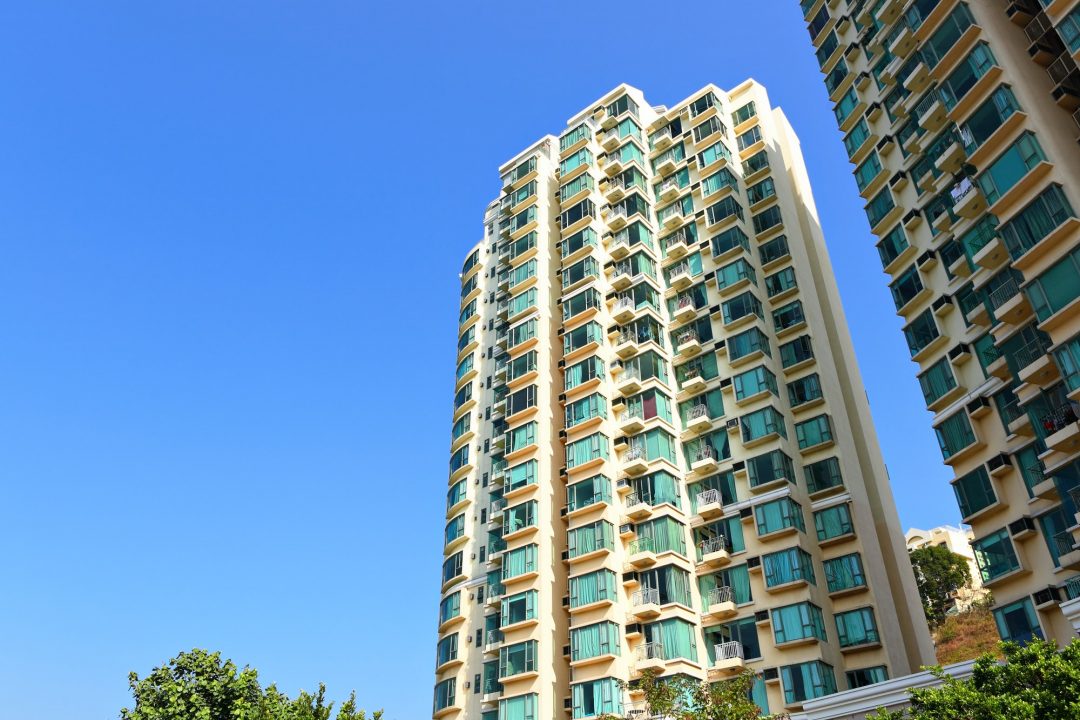
Most property fraud is not clever. It is a missing document, a rushed token payment, or a seller who is not who they say they are. If you are buying a flat in Delhi, the 12 checks below are the order in which a careful buyer and a good property lawyer would verify a deal. They are written for resale and builder-floor flats in West Delhi colonies such as Uttam Nagar and Dwarka Mor, but the logic applies across Delhi.
The short version
To avoid property fraud when buying a flat, confirm six things before you pay anything:
Property fraud is any deal where a buyer pays for a flat that the seller cannot lawfully sell, or that is not what was promised. In practice that means a fake or non-owner seller, a flat sold twice, a flat already pledged to a bank, forged or missing papers, an unapproved floor, or a token amount taken for a flat that does not exist.
In West Delhi colonies, most flats are builder floors on small plots. That makes the seller’s paperwork, more than the building, the place where most of the risk sits. Here are the common patterns and the check that catches each one.
| Type of fraud | How it happens | Checks that catch it |
|---|---|---|
| Fake or impersonated owner | Someone poses as the owner with forged or borrowed ID and takes a token amount. | Checks 1, 5 and 10 |
| Same flat sold twice | The seller signs agreements with more than one buyer, or sells after already agreeing to sell. | Checks 3 and 11 |
| Hidden mortgage | The flat is pledged to a lender, who holds the original papers. | Check 4 |
| Broken or forged chain of title | A previous deed is missing, forged, or does not connect to the next owner. | Checks 2 and 5 |
| Sale on power of attorney, affidavit or will papers | The seller has no registered deed in their own name. | Checks 5 and 9 |
| Unapproved construction | An extra floor or area is built beyond the sanctioned plan. | Checks 6, 7 and 10 |
| Hidden co-owners or heirs | A family member or legal heir later claims a share. | Check 9 |
| Token and advance scams | A flat is advertised below market and money is demanded before any documents are shown. | Checks 11 and 12 |
Do them in this order. Each check says what to ask for and what should make you stop. Your own property lawyer should carry out the legal parts, and you should be present for the rest.
Meet the seller in person and ask for original Aadhaar and PAN. Match the name, spelling and photo with the name on the registered sale deed, and with the name on the property-tax receipt and electricity bill. Utility bills do not prove ownership, but a mismatch is a reason to ask more questions.
Stop if: the owner will not meet you, sends a “representative” with no authority letter, shows only photocopies, or pushes you to pay a token amount before you have seen any papers.
A chain of title is the series of documents that shows how the flat passed from its first owner to the person selling it. Ask for every earlier deed and read them in order: the buyer in one deed should be the seller in the next. Lawyers usually trace the chain back as far as records allow, often around 30 years.
Stop if: a link is missing, the names do not connect, or the seller’s claim rests on possession, an agreement or an affidavit and not a registered deed. Many West Delhi colonies grew as unauthorised or regularised colonies, so what papers are normally available can differ from a planned society. Ask your lawyer what to expect for that colony.
A title search is a lawyer’s review of the records to confirm the seller has a clear title. An encumbrance certificate, issued through the sub-registrar’s office, lists registered transactions on the property for a period, such as mortgages, sale agreements and earlier sales. Ask your lawyer to check both, and to search the eCourts services portal for cases against the owner or the property.
Many lawyers also publish a public notice inviting objections before a purchase, which is one way a competing claim can surface. Stop if: the search shows a registered mortgage you were not told about, a second agreement, or a pending case.
Ask the seller in writing whether any loan was taken against the flat and where the original documents are. If a lender holds them, the flat is very likely mortgaged. You can also search the CERSAI central registry, which records security interests created by banks and financial institutions. If there is a loan, get a loan statement and the lender’s written closure or NOC terms.
The safest way to close a mortgaged flat is to pay the outstanding amount to the lender directly, against release of the original documents, as part of the agreed payment schedule. Do not pay the seller on a promise to clear the loan later. If you are borrowing for your own purchase, your lender will run its own legal check, and our guide to the home loan process in Delhi explains what banks ask for.
In India, ownership of a flat passes through a sale deed registered under the Registration Act, 1908 at the sub-registrar’s office. Ask for the seller’s registered deed and compare it with a certified copy from the sub-registrar. Check the registration number and date, the names, the property description, boundaries, area and floor, and the stamp paper.
Be especially careful with sales made through a general power of attorney, an agreement to sell, an affidavit or a will. In Suraj Lamp & Industries v. State of Haryana (2011), the Supreme Court said that such arrangements do not by themselves transfer ownership of immovable property, which needs a registered deed of conveyance. Registration also has costs, which our guide to property registration charges in Delhi breaks down.
Worth knowing. In everyday talk, “registry” usually means a registered sale deed. If a seller offers “GPA papers” or an “agreement” instead, treat that as a reason for your lawyer to look closer, not as a shortcut.
A sanctioned plan is the building plan approved by the local civic authority. Ask to see it and compare it with what you are buying: the number of floors, the layout, the area and the setbacks. A flat on a floor the plan does not allow can be hard to finance, insure and resell.
Whether a plan exists, and what kind, depends on the colony and the building, so ask your lawyer what applies. Stop if: the seller says a plan is “not needed”, cannot show one, or the building has more floors than the plan allows.
A completion certificate confirms that a building was built according to its sanctioned plan, and an occupancy certificate allows it to be occupied. Banks and later buyers often ask for them. Whether one is required, and whether it exists, depends on the type and age of the building, so have your lawyer confirm both.
If you are buying in a larger project and not a builder floor, check whether the project is registered with Delhi RERA and read the registration details. Some small builder-floor deals fall outside RERA, which is why the paper checks above matter even more there.
Ask for property-tax receipts, the latest electricity and water bills, and any society or maintenance dues. Unpaid dues can delay the transfer of connections and turn into a dispute after possession. Ask the seller to clear them before registration and give you written confirmation, or agree in writing to deduct them from the final payment.
Also ask for the electricity meter number and check it matches the flat you are visiting. After the purchase, apply to have the property mutated in your name with the civic body so that tax records follow ownership.
Every co-owner must sign the sale deed. If an owner has died, ask who the legal heirs are and whether they agree to the sale, and ask your lawyer what documents prove their rights, such as a will with probate or a succession certificate.
If someone other than the owner is selling on a power of attorney, ask your lawyer to confirm that it is valid, that it covers a sale, that it has not been revoked, and that the owner is alive, because a power of attorney generally ends when the person who gave it dies. Stop if: a co-owner is “abroad and will sign later”, or the seller cannot name all the owners.
Visit more than once, at different times of day. Confirm that the floor, area, boundaries and entry match the deed and the plan. Check who is in possession and whether a tenant is living there, look at roof rights and parking, and talk to neighbours about disputes or an unfinished extension. Our resale flat checklist has a physical-inspection list you can take with you.
Stop if: the flat you are shown is on a different floor, a different size or a different lane from the one in the papers.
Before you hand over a token amount, sign a written agreement. It should state the price, the payment schedule, the possession date, what the seller will clear before registration, what happens if the title turns out to be defective, and whether the token is refundable in that case. A broker’s or seller’s verbal assurance is not a legal protection.
Check that the price in the agreement is the real price. Under-declaring the value to save on stamp duty exposes you to legal and tax risk. See the hidden costs of buying a flat in Delhi for what to budget, and compare the deal value with the Delhi circle rate for Uttam Nagar.
Pay by bank transfer, cheque or demand draft, and keep the receipts. Avoid cash. Section 269ST of the Income Tax Act restricts receiving ₹2 lakh or more in cash for a single transaction, and cash leaves you with no proof of payment. For resident sellers, buyers generally deduct 1% TDS on sales above ₹50 lakh under Section 194-IA, so confirm the current rules with a chartered accountant.
Use a property lawyer you hire and pay yourself, not one suggested by the seller or the broker. Ask the lawyer to look at the papers before you pay the token amount, and to sign off again before registration. Pay the balance only at registration, once every document has been checked.
You do not need to finish all 12 before you speak to a seller, but you should not hand over money until the right checks are done. A practical order:
| Stage | Checks to finish | What to pay |
|---|---|---|
| Before a token amount | 1, 4, 5 and 9 as a first pass, plus a lawyer’s quick look at the papers | Nothing, or a small refundable token against a written receipt (Check 11) |
| Before you sign the agreement to sell | 2, 3, 6, 7, 8, 10 and 11 | Part payment by bank transfer, as the agreement states |
| At registration | Final lawyer sign-off and Check 12 | Balance by bank transfer, at the sub-registrar’s office |
Keep this list with you when you meet the seller. Ask for originals, and ask your lawyer to check the copies.
| Document | What it shows | Where it comes from |
|---|---|---|
| Registered sale deed and all earlier deeds | Ownership and the chain of title | The seller; a certified copy from the sub-registrar |
| Encumbrance certificate | Registered mortgages, agreements and sales | The sub-registrar’s office |
| Loan statement and closure or NOC terms | Whether a lender has a claim on the flat | The seller and the lender |
| Sanctioned building plan | What was approved to be built | The seller; the local civic body |
| Completion or occupancy certificate | That the building follows the plan, where it applies | The civic body; the builder |
| Property-tax receipts | Tax dues and who is recorded as owner | Municipal Corporation of Delhi |
| Electricity and water bills | Dues and connection details | The seller; the utility |
| Power of attorney, will, probate or succession papers | Authority to sell where the seller is not the sole owner | The seller; court or registrar records |
| Seller’s Aadhaar and PAN | The identity of the person selling | The seller, in original |
Walk away if
Slow down if
Price is a signal too. If an asking price is far below similar listings, compare it with live listings such as our flats for sale in Uttam Nagar and flats in Dwarka Mor, and ask why before you assume it is a bargain.
Stop any further payment and keep every receipt, message, agreement and bank record. Speak to a property lawyer straight away about civil remedies, and file a written complaint with the nearest police station. In Delhi, larger cheating and forgery cases can be handled by the Delhi Police Economic Offences Wing.
If money was sent by an online payment, call the national cybercrime helpline 1930 and report it at cybercrime.gov.in as quickly as you can, because early reports give a better chance of holding the money.
RED Real Estate Developers is a property business based in Vikas Nagar, Uttam Nagar, West Delhi. RED says its flats come with registry, NOC, building-plan approval and completion certificate. Ask for each of those papers in writing for any flat you like, and have your own lawyer check them, whether you buy from RED or anyone else.
To see what is available, browse flats for sale in Uttam Nagar or flats in Dwarka Mor, or talk to a property dealer in Uttam Nagar or a property dealer in Dwarka Mor. You can read more about the team on the About RED Real Estate page.
Meet the seller and match their original Aadhaar and PAN with the name on the registered sale deed. Then read the full chain of earlier deeds and have an independent property lawyer verify the documents before you pay a token amount.
The registered sale deed and earlier deeds, an encumbrance certificate, the sanctioned building plan, a completion or occupancy certificate where it applies, property-tax receipts, electricity and water bills, and any loan or NOC papers. If there are co-owners, heirs or a power of attorney, check those documents as well.
Ask the seller in writing, find out who holds the original documents, check the CERSAI registry, and have your lawyer review the encumbrance certificate. If there is a loan, agree in writing that it will be closed and the original documents released, ideally with the lender paid directly from your payment.
A title search traces ownership through the records and looks for mortgages, disputes, liens or other claims. It helps confirm that the seller can legally transfer clear title to you.
Not on its own. In Suraj Lamp & Industries v. State of Haryana (2011), the Supreme Court said such arrangements do not by themselves transfer ownership of immovable property, which needs a registered deed of conveyance. Ask your lawyer before relying on one.
Be cautious. Banks and future buyers often ask for it. Ask a lawyer whether a completion certificate is required for that building and whether it exists, and get the answer in writing before you pay.
Compare the building with the sanctioned plan, confirm the floor and area, and check whether any extra construction is covered by approval. Have your lawyer confirm what applies in that colony.
Verify the seller’s identity and ownership, confirm there is no loan or dispute, and have a lawyer look at the papers. Sign a written agreement that states the price, refund terms, possession date and payment schedule before you pay anything.
It is best not to. Pay by bank transfer, cheque or demand draft so you have a record. Section 269ST of the Income Tax Act also restricts receiving ₹2 lakh or more in cash for a single transaction.
No. A broker can show you options, but legal title, approvals, loans and the seller’s authority should be checked independently by a property lawyer you hire.
Written by Parveen Singh
Parveen is a digital marketing professional at RED Real Estate Developers. He writes about buying property in West Delhi, from Uttam Nagar to Dwarka Mor.
This article is general information for homebuyers, not legal, tax or financial advice. Laws, fees and procedures change, and the right checks depend on the property and the colony, so verify with a qualified property lawyer and the relevant authority before you pay. Last reviewed 17 November 2026.
Message us your area and budget on WhatsApp, and we will share flats with their papers listed and arrange a site visit. Whichever flat you choose, have your own lawyer check the documents first.
Uttam Nagar has two Blue Line stations, so “near the metro” can mean very different things from one lane to the next. Here is what flats close to Uttam Nagar East and West cost in 2026, how the two sides compare, and how to check the real walking distance before you pay a token amount.
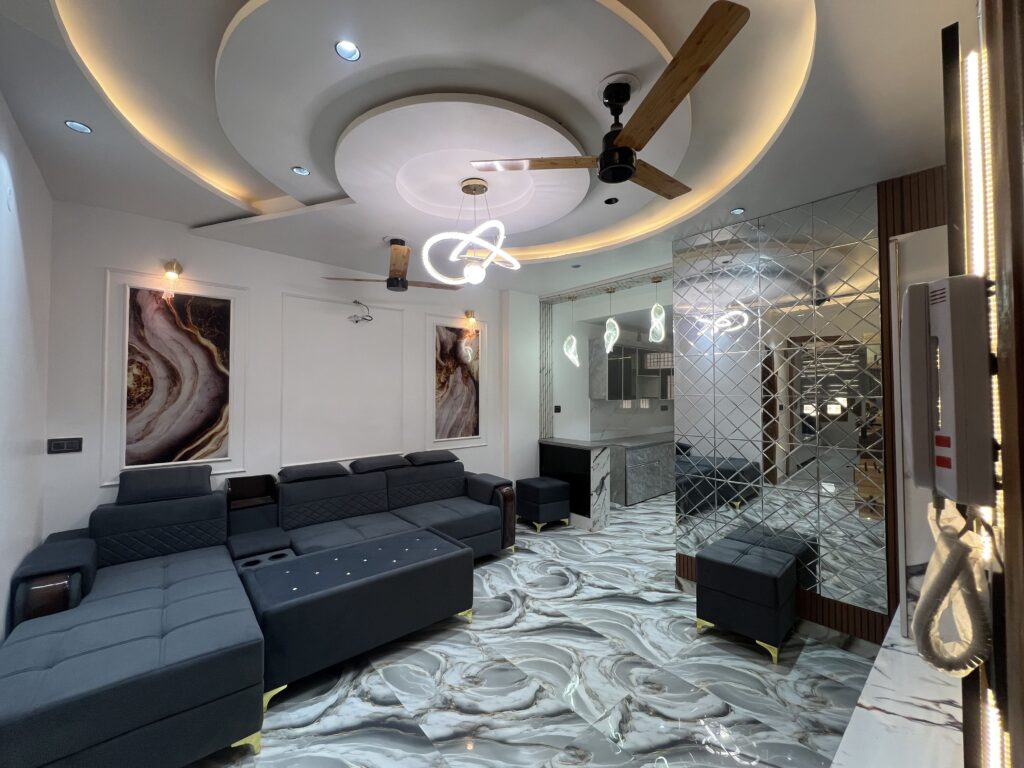
The short version
Five things to know before you shortlist a flat:
Uttam Nagar sits on the Delhi Metro’s Blue Line and has two stations: Uttam Nagar West and Uttam Nagar East. Nawada and Dwarka Mor lie beyond Uttam Nagar West, and Janakpuri West is the next station after Uttam Nagar East.
Locally, East and West also name the two halves of the colony, and they behave differently on price, plot size and street width. But a flat’s distance to its nearest station matters more than which half it is in. Read the numbers below as a starting point, then measure each flat on foot.
Homes here are sold by plot area in gaj rather than carpet area, and most are builder floors. Here is how asking prices on RED’s current listings split between the two sides.
| Flat type | Uttam Nagar East | Uttam Nagar West |
|---|---|---|
| 1 BHK | Rarely listed | From ₹17 lakh (40 to 45 gaj) |
| 2 BHK | ₹27 to ₹40 lakh | ₹40 to ₹53 lakh |
| 3 BHK | ₹41 to ₹68 lakh | ₹49 to ₹88 lakh |
These are asking prices from listings checked on 12 November 2026, not sale prices, and they move as stock changes. For the full breakdown see the 2 BHK price guide for Uttam Nagar and the 3 BHK flats in Uttam Nagar page.
What does being close to the station add? RED’s price guide estimates that a flat within about 500 metres of an Uttam Nagar station carries a premium of roughly ₹3 to ₹7 lakh over a similar flat further in. Lift, parking, road width and the age of the building move the price too, so treat that figure as a rough guide and not a rule.
Worth knowing. A flat that is 100 metres closer to the station is not automatically worth the extra lakh. Compare two or three flats on the same lane width and building age before you decide what the metro is worth to you.
East may suit you if
West may suit you if
Not sure which side fits? The buying guide for Uttam Nagar compares both in more detail, and our Uttam Nagar property listings let you filter by budget.
A five-minute distance check
Read listing wording carefully too. “Distance from main road” is not the same as distance from the station. Where a listing gives a figure, ask what it is measured to.
Here are three live 2 BHK listings, with what each one actually says about location. Availability changes, so check each page for the latest.
| Listing | Price | Details | Metro note |
|---|---|---|---|
| 2 BHK, A-Block, Matiala (East) | ₹38 lakh | 53 gaj, 25 ft road, lift and bike parking | Listed as 600 metres from Uttam Nagar West Metro Road |
| 2 BHK, Jain Park (West) | On request | 60 gaj, 30 ft road | Described as suited to buyers who want Blue Line access |
| 2 BHK, Vikas Nagar (East) | ₹28 lakh asking | 50 gaj, near Mata Chandan Devi | A budget pick, not a walk-to-metro flat |
The first is the closest match for a buyer who wants to walk to the station. The last is there to make a point: the cheapest flats are often the ones further from the line, and the saving is the reason. For more, browse all flats for sale in Uttam Nagar.
Inside the building
Around the building
1 BHK. Starts at ₹17 lakh on RED’s listings, mostly in Uttam Nagar West. It suits a single buyer, a couple, or someone buying a first home to rent out.
2 BHK. The most common choice, and the widest price range, from about ₹27 lakh in the East to ₹53 lakh in the West. See the 2 BHK price guide.
3 BHK. For joint families or anyone who wants room to grow. Most sit on 70 to 110 gaj plots. See the 3 BHK flats page.
Whatever the distance to the metro, the paperwork decides whether the purchase is safe. Ask to see the ownership or title documents, the approved building plan, property tax receipts, mutation records and the encumbrance status. Check RERA status where it applies, and understand the sale deed and registry process before you pay a token.
Our guide on what to check before buying a resale flat goes through the full list, and you can read about registration charges in Delhi and the hidden costs of buying a flat so the final bill holds no surprises.
If you plan to borrow, the home loan interest rates guide explains eligibility, EMI and fees. RED builds and sells its homes directly and says it charges no brokerage and supports documentation through registry. Ask any seller to put the same terms in writing.
Nawada and Dwarka Mor are on the same Blue Line and often price differently. Compare properties in Nawada and flats in Dwarka Mor before you settle, or see the wider West Delhi property hub and the West Delhi price guide. Our flats in Delhi buying guide compares all three areas side by side.
Want someone to shortlist for you? A property dealer in Uttam Nagar can match flats to your budget and book site visits.
Uttam Nagar East and Uttam Nagar West, both on the Delhi Metro Blue Line, serve the locality. Which one is closer depends on the exact lane, so check the walking route to each.
Yes. RED’s 1 BHK flats start at about ₹17 lakh and are mostly in Uttam Nagar West on 40 to 45 gaj plots. Confirm the walking distance for each one.
On RED’s current listings, 2 BHK asking prices run from about ₹27 lakh to ₹53 lakh. Uttam Nagar East is generally ₹27 to ₹40 lakh and Uttam Nagar West ₹40 to ₹53 lakh.
RED lists 3 BHK flats from about ₹41 lakh to ₹88 lakh. East runs roughly ₹41 to ₹68 lakh and West roughly ₹49 to ₹88 lakh, depending on plot size, from 70 to 110 gaj.
East is generally the lower-priced side for 2 BHK flats. West has more larger plots and higher-priced 3 BHK floors. The better side is the one with the right flat at your budget and a short, safe walk to the station.
RED’s price guide estimates a premium of roughly ₹3 to ₹7 lakh for flats within about 500 metres of an Uttam Nagar station. It is a rough guide, and lift, parking and road width also affect price.
RED lists ready-to-move builder floors in Uttam Nagar, including listings near the metro corridor. Each listing page shows its current status, so confirm it before you visit.
RED builds and sells its homes directly and says it charges no brokerage, with documentation support through registry. Ask for the terms in writing before you pay anything.
Check lift access, parking, water supply, power backup, road width, roof rights, ventilation and construction quality. Walk the route to the station, and visit at rush hour to judge noise and crowding.
It can suit budget-focused buyers because flats are relatively affordable and the Blue Line is close. Compare a few lanes, verify the papers, and work out your EMI before you commit.
Ownership or title documents, approved building plan, property tax records, mutation records, encumbrance status, RERA status where applicable, and the sale deed and registry process.
Message or call RED Real Estate on +91 88001 84770 with your budget and the BHK you want, or use the enquiry form on the website. RED says site visits run seven days a week.
Written by Parveen Singh
Parveen is a digital marketing professional at RED Real Estate Developers. He writes about buying property in West Delhi, from Uttam Nagar to Dwarka Mor.
This article is general information for homebuyers, not financial, legal or tax advice. Prices are asking prices from RED Real Estate’s listings checked on 12 November 2026 and change as stock changes. Distances depend on the exact property and route, so verify them on site before you decide.
Tell us your budget and the BHK you want on WhatsApp, and we will shortlist flats near the Uttam Nagar stations and arrange a site visit. Or browse what is available now.
Home loan interest rates in India moved up in October 2026, when the RBI raised the repo rate for the first time in more than three years. Here is what that means for your rate, your EMI and how much you can borrow, with worked examples for West Delhi buyers.
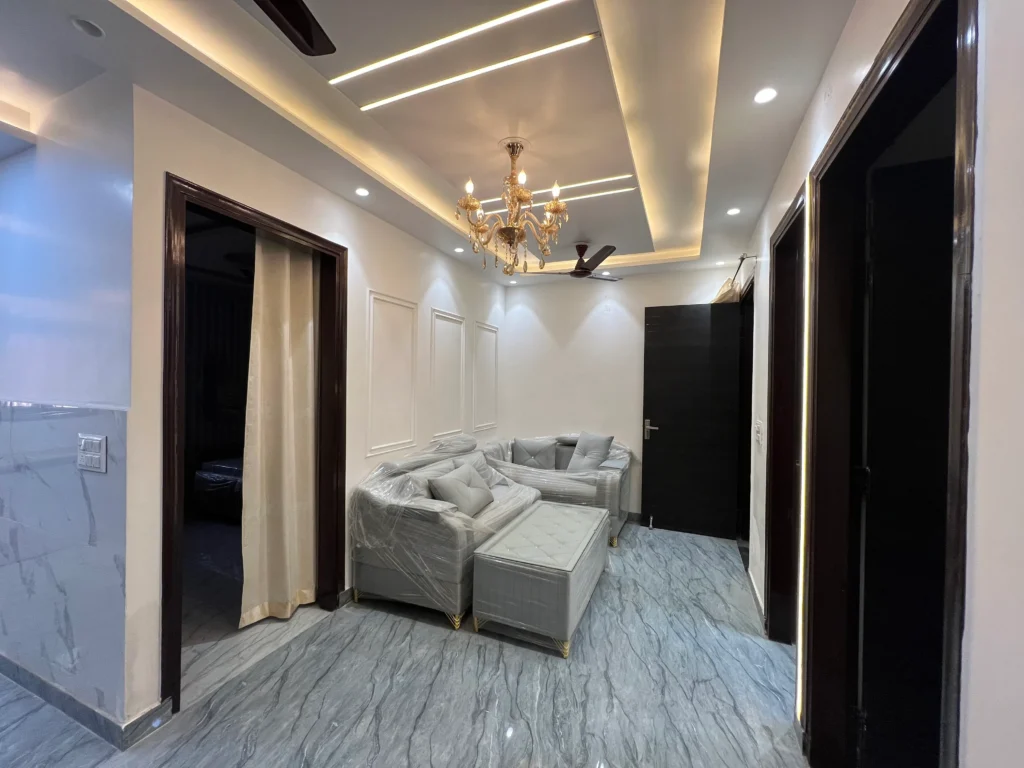
The short version
Five things to know before you apply:
Buying a flat in West Delhi usually means taking a home loan, and the loan decides what you can afford. Rates have just changed, so figures you saw a few months ago may be out of date. This guide covers today’s rates, how your EMI is worked out, who is eligible and what it all costs, with examples for flats in areas like Uttam Nagar and Dwarka Mor.
On 7 October 2026 the RBI’s Monetary Policy Committee voted unanimously to raise the repo rate from 5.25% to 5.50%. It was the first increase since February 2023, and the committee also moved its stance to calibrated tightening. Banks have started passing it on, so floating-rate home loans are getting costlier.
| Benchmark | Before | After |
|---|---|---|
| RBI repo rate | 5.25% | 5.50% (from 7 Oct 2026) |
| SBI RLLR | 7.50% | 7.75% (from 15 Oct 2026) |
| SBI EBLR | 7.90% | 8.15% (from 15 Oct 2026) |
These are benchmarks, not the rate you will pay. Your home loan rate is the benchmark plus the lender’s spread, and the spread depends on your credit score, loan size, job type and the lender itself. Across banks, housing finance companies and NBFCs, new home loans are commonly quoted somewhere between about 7.5% and 9.5% a year. The low end goes to salaried borrowers with very high credit scores at large banks. Lower scores, self-employed borrowers and some smaller lenders sit towards the top of the range.
The RBI’s next policy meeting is on 2 to 4 December 2026, so rates may move again soon. The benchmark figures above were checked on 4 November 2026.
Worth knowing. A rate quoted in an older article may pre-date the October hike. Ask the lender for today’s rate in writing, along with the benchmark it is linked to and how often it resets.
Most new floating-rate home loans are linked to an external benchmark, usually the repo rate. The bank turns that into its own repo-linked lending rate (RLLR), adds a spread, and the result is your interest rate. When the repo rate rises, the lender raises its RLLR, and your rate follows at the next reset, which RBI rules require at least once every three months.
Older loans can behave differently. If yours is linked to the lender’s MCLR or an old base rate, it may reset on another schedule. Check your loan agreement, or ask your lender which benchmark you are on.
Here is what a 0.25 point rise does. On a ₹50 lakh loan over 20 years, going from 8.50% to 8.75% lifts the EMI from about ₹43,391 to about ₹44,186, roughly ₹795 more a month. RBI’s fair-practice rules also expect lenders to let you choose between a higher EMI and a longer tenure when your rate resets, so ask which option applies to your loan.
A lender is really asking three questions. Can you repay (your income)? Will you repay (your credit history)? And is the property good security (clear title, approvals and valuation)?
As a rough guide, here is how much loan different incomes can support, assuming 8.5% interest, a 20-year tenure and no other EMIs:
| Net monthly income | EMI the bank may allow | Loan you may get |
|---|---|---|
| ₹30,000 | ₹12,000 to ₹15,000 | about ₹13.8 lakh to ₹17.3 lakh |
| ₹50,000 | ₹20,000 to ₹25,000 | about ₹23 lakh to ₹28.8 lakh |
| ₹80,000 | ₹32,000 to ₹40,000 | about ₹36.9 lakh to ₹46.1 lakh |
Existing EMIs reduce these numbers. A longer tenure or a co-applicant with a steady income raises them. The lender’s own policy has the final say.
You also have to cover part of the price yourself. RBI’s loan-to-value limits cap how much of the property value a lender can finance:
| Loan amount | Maximum loan | Minimum down payment |
|---|---|---|
| Up to ₹30 lakh | 90% of property value | 10% |
| ₹30 lakh to ₹75 lakh | 80% of property value | 20% |
| Above ₹75 lakh | 75% of property value | 25% |
Stamp duty, registration and legal fees are usually not financed, so keep cash aside for them. Our guides to property registration charges in Delhi and the hidden costs of buying a flat in Delhi show what to expect.
Salaried applicants
Self-employed applicants
For the property, expect to hand over the sale deed or agreement to sell, the approved plan, tax and utility receipts, and any no-objection certificates. The lender’s lawyer will review them, and the lender will also value the flat. If the valuation comes in below the agreed price, you will have to fund the gap.
The formula is EMI = P × r × (1+r)^n ÷ ((1+r)^n − 1). P is the loan amount, r is the monthly rate (annual rate ÷ 12 ÷ 100) and n is the number of months. An online EMI calculator does the same sums. A handy rule of thumb: at 8.5% over 20 years, you pay about ₹868 a month for every ₹1 lakh you borrow.
This table shows monthly EMIs over 20 years at three interest rates:
| Loan amount | At 7.5% | At 8.5% | At 9.5% |
|---|---|---|---|
| ₹25 lakh | ₹20,140 | ₹21,696 | ₹23,303 |
| ₹30 lakh | ₹24,168 | ₹26,035 | ₹27,964 |
| ₹35 lakh | ₹28,196 | ₹30,374 | ₹32,625 |
| ₹50 lakh | ₹40,280 | ₹43,391 | ₹46,607 |
Tenure matters as much as the rate. On a ₹30 lakh loan at 8.5%, the EMI is about ₹29,542 over 15 years, ₹26,035 over 20 years and ₹24,157 over 25 years. The total interest you pay is about ₹23.2 lakh, ₹32.5 lakh and ₹42.5 lakh respectively. A lower EMI feels easier, but it costs far more in the end.
Here is a West Delhi example. Say a flat costs ₹40 lakh and you pay 20% (₹8 lakh) upfront. You borrow ₹32 lakh. At 8.5% over 20 years, the EMI is about ₹27,771 and the total interest is about ₹34.7 lakh. At a 40% to 50% EMI limit, you would need a net monthly income of roughly ₹56,000 to ₹70,000 to qualify. Many flats in West Delhi cost less than this example, so your own numbers could be lower. You can see current prices on our Uttam Nagar listings.
Worth knowing. Test your budget at a rate one full point above your quote. If that EMI would strain your monthly budget, borrow less or choose a longer tenure now.
With the RBI now in a tightening mood, this choice matters more than it did a year ago. A floating rate moves with the benchmark, so your rate can rise or fall at each reset. A fixed or hybrid rate holds for a set period, then usually moves to floating. Fixed rates generally start higher.
Floating suits you if
Fixed or hybrid suits you if
On floating-rate home loans to individuals, lenders cannot charge prepayment or foreclosure penalties. Fixed-rate loans may carry them, so check before you sign.
You cannot control the RBI, but you can control a lot of what sits in your own rate.
Before you apply
Many lenders price their best rates for scores of around 750 to 800 and above, so a headline rate is rarely what everyone gets. Always ask what score and profile the advertised rate needs.
| Charge | What to expect |
|---|---|
| Processing fee | Usually a percentage of the loan, often between 0.25% and 1%, plus GST. Some lenders waive or cut it during offers. |
| Legal and valuation fees | Some lenders charge for checking the property papers and valuing the flat. |
| Prepayment or foreclosure | None on floating-rate loans to individuals. Fixed-rate loans may carry a charge. |
| Documentation charges | Stamp duty on loan documents and mortgage-related charges vary by state and lender. |
| Insurance | Often offered with the loan. Check whether it is optional and compare the price. |
Read the sanction letter line by line before you accept. A small difference in fees can be worth more than a small difference in the rate. See our home loan process in Delhi guide for the full sequence, from application to disbursement.
Income tax rules have been reorganised under the Income-tax Act, 2025, so the old section numbers may not match your filing. Ask a chartered accountant which regime and deductions suit you before you decide.
A balance transfer moves your outstanding loan to a lender charging less. A commonly used rule of thumb is a gap of about 0.5 percentage points or more, with plenty of tenure left. Count the new lender’s processing fee, legal charges and any cost of closing the old loan before you decide. With rates rising, also check how the new rate is linked and when it resets.
Before you move, ask your current lender whether it will cut your spread. Many will agree for a small fee, which is cheaper and faster than a transfer.
After the RBI raised the repo rate to 5.50% on 7 October 2026, new home loans are commonly quoted at roughly 7.5% to 9.5% a year. Where you land depends on your credit score, loan size, job type and lender. Ask the lender for today’s rate in writing.
It changes often, and the lowest advertised rate usually needs a very high credit score. Large public sector and private banks tend to start near the low end. Compare at least three lenders on the day you apply, and compare the processing fee as well as the rate.
The RBI raised the repo rate on 7 October 2026 and changed its stance to calibrated tightening, so floating rates are rising for now. The next policy meeting is on 2 to 4 December 2026. Nobody can promise where rates will go, so plan your EMI with some room to spare.
EMI = P × r × (1+r)^n ÷ ((1+r)^n − 1), where P is the loan amount, r is the monthly interest rate (annual rate ÷ 12 ÷ 100) and n is the number of months. At 8.5% over 20 years, the EMI is about ₹868 for every ₹1 lakh borrowed.
Many lenders are comfortable with 750 and above, and several keep their best rates for scores around 800 or higher. A lower score may still get you a loan, usually at a higher rate or with extra checks.
If banks allow 40% to 50% of your net income towards EMIs, that is ₹20,000 to ₹25,000 a month. At 8.5% over 20 years, that supports a loan of roughly ₹23 lakh to ₹29 lakh. Existing EMIs reduce this, and a co-applicant can increase it.
Under RBI’s loan-to-value limits, lenders can finance up to 90% of the property value for loans up to ₹30 lakh, 80% for loans above ₹30 lakh and up to ₹75 lakh, and 75% above ₹75 lakh. Stamp duty, registration and legal fees usually come out of your own pocket.
Often the spread, the processing fee or both can be negotiated, especially with a strong credit score, a stable salary and a competing offer in hand. Ask for the final rate, fees and benchmark in writing before you pay anything.
Most borrowers pick floating, because it usually starts lower and you can prepay without a penalty on loans to individuals. Fixed or hybrid rates give more certainty for a period, but they usually start higher and may reset later. Read what happens when the fixed period ends.
Under the old tax regime, interest on a self-occupied home is deductible up to ₹2 lakh a year, and principal repayment counts towards the ₹1.5 lakh limit with other eligible investments. The new regime generally does not allow these deductions for a self-occupied home. Have a chartered accountant confirm what applies to you.
A transfer can make sense if the new rate is clearly lower and plenty of tenure is left, after you count the processing fee, legal charges and any cost of closing the old loan. First ask your current lender whether it will cut your spread.
Self-employed borrowers are often priced a little higher and are asked for more income proof. NRI eligibility and documents vary by lender, so ask each one for its NRI home loan terms.
Written by Parveen Singh
Parveen is a digital marketing professional at RED Real Estate Developers. He writes about buying property in West Delhi, from Uttam Nagar to Dwarka Mor.
This article is general information for homebuyers, not financial, legal or tax advice. Lending rates, fees and tax rules change, and each lender sets its own terms, so confirm current figures with the lender and a qualified professional before you commit. Benchmark rates were checked on 4 November 2026.
Tell us the flat you like and your budget on WhatsApp, and we will help you work out the loan and the papers. Or browse what is available in Uttam Nagar.
1,648 DDA flats in Narela are going for sale on 29 October at noon. The first lot lasted about two hours, so here’s what to sort out before then.
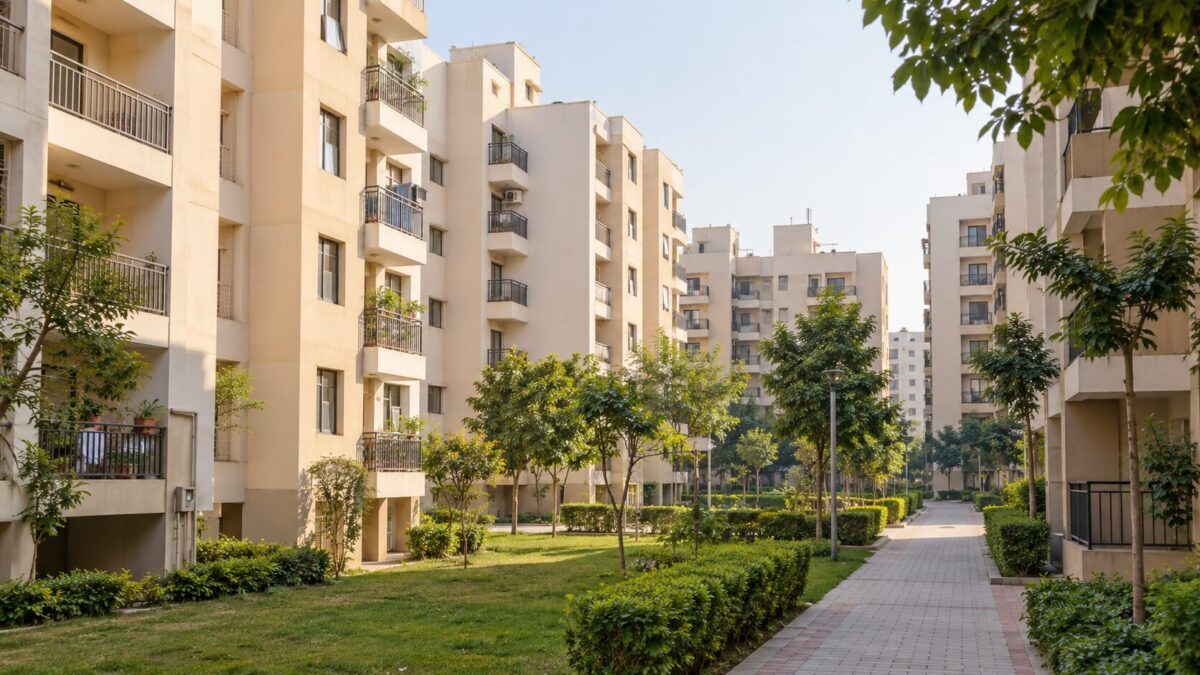
DDA is here again with 1,648 more LIG flats in Narela through the Awaas Nivesh Yojana 2026. Booking will begin from 29 October 2026, 12:00 Noon via the DDA Awaas Portal. The cost will be ₹14,94,791 (25% discount included), along with GST and maintenance.
Did you miss your chance in the first set of 2,516 flats? Well, here is your second chance! As per DDA, the first batch was sold out within 2 hours. This batch too will be on a first come first served basis. All this will happen before 12:00 Noon on 29 October. Refer to the official flats list and the circular issued.
Awaas Nivesh Yojana 2026 is the online scheme of DDA to purchase LIG flats in Narela. It informs that the flats are available for occupation and booking would be on first-come-first-serve basis. There is an additional flat which is being offered at a discount rate of 25% of the published rate in the brochure.
These flats have been allocated in Pocket 1, Sectors G2 to G6, Narela. The area of each flat is 49.90 sq. m which includes common areas as well. Hence, the carpet area would be lower than 49.90 sq. m.
| Detail | What DDA says |
|---|---|
| Scheme | DDA Awaas Nivesh Yojana 2026 |
| Additional flats | 1,648 LIG flats |
| Location | Pocket 1, Sectors G2–G6, Narela |
| Listed price | ₹14,94,791 (after 25% discount) |
| Plinth area | 49.90 sq m, including common areas (not carpet area) |
| Booking opens | 29 October 2026, 12 noon |
| How to book | Online, on DDA’s Awaas Portal |
| Allotment | First come, first served |
| Booking amount | ₹1 lakh per flat (as per the latest announcement) |
The figure of ₹14,94,791 does not cover GST or maintenance costs, therefore, plan for that too. The latest list of demand and payments by the DDA is available through the portal.
Getting registered for flats in such apartments is not much of a task. The requirements include that one must be an Indian national, of age 18 and above, with the knowledge of his/her PAN number and bank account details. The ownership of property in Delhi or anywhere else doesn’t make any difference here.
As per the brochure, there is a non-refundable registration fee of Rs. 2,500 (inclusive of GST). If one is already registered on the Awaas portal, then no payment is required. There might be more recent circulars regarding the same.
Don’t dawdle at the payment step. The brochure gives you 15 minutes after you select a flat. With flats going first come, first served, read the portal’s instructions in advance and have your payment method ready. Check the booking date on the portal once more before you start.
A DDA flat comes through a government scheme, which is a different thing from buying a flat from a private developer or dealer. To compare areas, start with our guide to flats in Delhi and our West Delhi property page, then look at current listings in Uttam Nagar and Dwarka Mor.
Don’t put the two prices side by side and call it a comparison. Narela and West Delhi are different places with different paperwork. Compare total cost, flat details, commute and documents. Our posts on the hidden costs of buying a flat in Delhi and property registration charges show what a flat costs beyond the sticker price. For the Narela flats themselves, book only through DDA’s official Awaas Portal.
If you would like to look at private options too, our property dealer in Uttam Nagar and property dealer in Dwarka Mor can show you resale flats in West Delhi alongside what DDA is offering. More on our real estate services in West Delhi.
Booking opens on 29 October 2026 at 12 noon on DDA’s Awaas Portal.
DDA has added 1,648 LIG flats in Pocket 1, Sectors G2–G6, Narela.
As per the official list, the discounted price is ₹14,94,791 (about ₹14.95 lakh). GST and maintenance charges are extra.
The booking amount is ₹1 lakh per flat, according to the latest announcement. Check DDA’s latest circular for the payment and cancellation terms.
No. It’s first come, first served, and booking happens online while flats last.
As per the original brochure, there is no restriction on owning property in Delhi or anywhere else. Check the latest scheme terms before applying.
The 49.90 sq m figure is the plinth area including common areas, not the carpet area. Check the flat-specific details and layout on DDA’s official portal.
The original brochure says the flats are available for immediate occupation. Double-check this for the flat you select.
DDA calls the Rithala–Narela–Kundli corridor upcoming, so assume it isn’t running yet. Check today’s transport before you decide.
On DDA’s Awaas Portal (eservices.dda.org.in), where you will find the flat details, layouts, brochure and application process.
Written by Parveen Singh
Parveen is a digital marketing professional at RED Real Estate Developers. He writes about buying property in West Delhi, from Uttam Nagar to Dwarka Mor.
This is general information, not legal or financial advice. Prices, inventory and dates can change, so confirm everything on DDA’s official portal before paying. We checked the details against DDA’s announcement as reported on 23 October 2026.
Message us on WhatsApp and we’ll talk you through what your budget can get in Uttam Nagar, Dwarka Mor and Nawada. Or browse what’s available right now.
A resale flat has one big advantage: you can walk through it before you pay for it. Here is what to check before you do.

What a walk-through can’t show you is who legally owns the flat, whether the building matches what was approved, and which bills or repairs arrive along with the keys.
Use this checklist when you view a flat in Uttam Nagar, Dwarka Mor, Nawada or anywhere else in West Delhi. It will help you ask better questions, and know when to bring in a lawyer or an engineer.
The short version
Before you hand over any token money, make sure you can say yes to all five:
Ask for the registered sale deed (or conveyance deed) along with the earlier documents showing how the flat reached the seller. Then check that the seller’s name, the address and the plot details match across every paper, and that the person in front of you is the person named on the deed.
Family property often has more than one owner. If there are co-owners, ask who needs to sign. And if someone is selling on the owner’s behalf, “my brother is abroad, he’s fine with it” is not enough. Ask to see that person’s written authority to sell, and have a lawyer verify it before any money moves.
You will also meet flats in West Delhi that have passed from hand to hand on a power of attorney, an agreement to sell or a will, without a registered sale deed at each step. The Supreme Court has held that papers like these don’t, on their own, transfer ownership the way a registered sale deed does. That doesn’t make such a flat a no-go, but it does mean a lawyer should read the whole chain before you go further.
A tax receipt or electricity bill can back up the details, but it isn’t proof of ownership. Delhi’s Revenue Department also offers an online search for past property registrations. Treat it as one input, and ask your lawyer to read the results alongside the full paper trail. See Delhi’s property-registration information.
Ask the seller
Ask directly: is this flat mortgaged, and is a bank or lender holding any of the original papers? Also ask whether there is any court case, family dispute or notice connected to the property.
A flat with a home loan still running can be bought, but only if the lender’s closure steps and the release of the original documents are spelled out in writing, with your payment schedule built around them. “We’ll sort it out after the registry” is not a plan.
Don’t rely on a single search. One certificate or online check may not show everything. Ask your lawyer which searches and records make sense for this flat and its ownership history.
Ask for the sanctioned building plan and walk the building with it in your hand. Count the floors. Look for an extension, a covered balcony, a room added on the terrace or a layout that has been changed. If something doesn’t match, ask whether the change was approved, and take professional advice before you go ahead.
Where one applies, ask for the completion or occupancy certificate and check that it is for this building. The Delhi Development Authority explains that a building shouldn’t be occupied until it has an occupancy certificate, subject to the rules and authority that apply to the property. Read the DDA building FAQs.
It also helps to ask about the colony itself. Some colonies in this part of Delhi began as unauthorised and were regularised later. Ask your lawyer to confirm the colony’s current status and how it could affect registration, a home loan or resale.
In much of West Delhi, a “flat” means one floor of a low-rise building, and the plot is described in gaj. So the number of bedrooms tells you very little about what you will own or be allowed to use.
Ask your lawyer to spell out the exact unit and the rights the sale transfers: the floor, the built-up area, a share in the land where applicable, the common areas and entrance, parking, and terrace or roof (chhat) rights. If the seller has promised parking, storage or roof access, get it written into the agreement. A verbal promise rarely survives a change of owner.
Worth knowing. Two floors with the same BHK can be very different purchases if one includes the roof and the other doesn’t. Ask early, and ask for the answer in writing.
Ask for the latest property tax receipt and recent electricity and water bills. Check that the names and addresses fit the seller and the flat. They help confirm details, but they don’t prove ownership.
If the owners share costs for a lift, a generator or repairs, ask for a note of anything outstanding and anything coming up. Then agree in writing who pays charges up to the handover date, and keep every receipt.
A fifteen-minute viewing can miss a slow leak, or a damp patch hiding behind fresh paint. Go in daylight, take your time in every room, and if you can, come back at a different time of day to see the light, the noise and the lane for yourself.
Look for
Test and ask
If you spot persistent damp or structural cracks, get a qualified engineer to look before you commit. And if the listing says “near the metro”, walk the route yourself at the hour you would really commute. A nearby landmark is not the same as a measured walk.
Compare flats in the same locality, but look past the BHK label. Plot size in gaj, the floor, the condition of the building, road width, parking and the rights included all move the price.
One simple habit helps: divide the asking price by the plot size in gaj, then ask the seller to explain any big gap between similar flats. Our West Delhi flats buying guide shows how that works on live listings.
Remember that listings show asking prices, not what a flat finally sold for. Use them as a reference point, and confirm current details before you rely on a number. You can start with properties listed across West Delhi.
If you want help comparing, our property dealer in Uttam Nagar and property dealer in Dwarka Mor teams can shortlist flats for you and tell you which papers to ask for.
The price on the listing is rarely the full cost. Set aside money for:
Stamp duty depends on the buyer and the rules in force on the day of registration, so confirm the figure with the Sub-Registrar before you finalise your budget. Our guide to property registration charges in Delhi walks through it, and the Delhi Revenue Department has official registration information. For the wider picture, read the hidden costs of buying a flat in Delhi.
One more thing to ask about: if the deal value is ₹50 lakh or more, the buyer generally has to deduct 1% TDS and deposit it with the government. Ask a chartered accountant how it applies to your transaction, because the details can depend on the seller and the date.
Don’t sign anything you haven’t read, and don’t let “other buyers are waiting” rush you. Before you sign, check that the agreement:
Pay through traceable banking channels and keep a receipt for every payment. And have an independent property lawyer, one who isn’t working for the seller, review the agreement before you sign or transfer a large amount.
Confirm which Sub-Registrar office handles the property, which documents and witnesses are required, and what fees apply. Delhi’s Revenue Department publishes property-registration FAQs and guidance. Before you sign, check that the final registered document carries the agreed property details and rights.
On handover day, don’t just take the keys and leave. Make a short record of:
A simple rule of thumb. If an answer affects ownership, approvals, money or what you’re allowed to use, ask for it in writing and have the right professional check it.
Keep this open on your phone while you view flats, or screenshot it.
| Check | Ask for | Who verifies |
|---|---|---|
| Ownership | Registered sale deed, earlier papers, IDs of every owner | Your lawyer |
| Loans and claims | Written loan-closure steps, no pending disputes | Your lawyer |
| Plan and approvals | Sanctioned plan, plus completion or occupancy certificate where it applies | Your lawyer or an architect |
| Rights included | Floor, land share, parking and roof rights, in writing | Your lawyer |
| Dues | Property tax, electricity, water and maintenance records | You and your lawyer |
| Condition | Damp, cracks, wiring, plumbing and water pressure checked | You, and an engineer if in doubt |
| Price | Similar flats compared, including price per gaj | You |
| Total cost | Stamp duty, registration, legal fees, and TDS if it applies | The Sub-Registrar and a chartered accountant |
| Agreement | Property, parties, payment dates and possession date | Your lawyer |
| Handover | Keys, meter readings, fixtures and receipts | You |
Start with the registered sale deed and the earlier papers in the ownership chain. Then ask for the sanctioned plan, property tax receipts, electricity and water bills, and anything the lender holds if there’s a loan. Your lawyer will tell you what else this particular flat needs.
Match the seller’s ID against the name on the current registered deed, and trace how the flat reached them. If there are co-owners, or someone is selling on the owner’s behalf, have an independent lawyer verify the authority and the full chain.
It can be, as long as the lender’s closure process and the release of the original documents are handled clearly. Get the process in writing, and ask your lawyer to build it into the agreement and the payment schedule.
You may come across such flats, but they carry more risk. The Supreme Court has held that these papers don’t transfer ownership the way a registered sale deed does. Don’t pay anything until a lawyer has reviewed the chain and told you what it means for your title and your loan.
Seepage, mould, cracks, plumbing and drainage problems, damaged wiring, ventilation, light and noise. Turn on every tap and switch, check the water pressure, and visit at more than one time of day.
Yes. Ask exactly what is included and have each right recorded in the transaction documents. Don’t assume a verbal promise will carry over to you.
It depends on the building and the authority that applies. Ask for the relevant certificate where it applies, and have a professional confirm that it matches the building you’re buying.
Mainly stamp duty and registration charges, the lawyer’s fees, any loan charges, repairs and moving costs. TDS may also apply if the deal is ₹50 lakh or more. For the registration side, see our guide to property registration charges in Delhi.
Before you sign an agreement or pay a large amount. A lawyer can read the ownership papers, approvals, claims, dues and the proposed transfer terms before you’re committed.
Written by Parveen Singh
Parveen is a digital marketing professional at RED Real Estate Developers. He writes about buying property in West Delhi, from Uttam Nagar to Dwarka Mor.
This article is general information for homebuyers, not legal, tax or financial advice. Requirements vary by property and can change, so have an independent professional review your documents and transaction before you commit. Official links were checked on 23 October 2026.
Send us the listing details on WhatsApp and we’ll help you work out which papers to ask for. Still comparing? Browse what’s currently available across West Delhi.
Property registration charges in Delhi are two types stamp duty and registration fee. in a sale we have to pay stamp duty fees of 6% of the property value if the buyer is a man and 4% if the buyer is a woman. Joint ownership by a man and a woman is commonly reported at 5%. The registration fee is 1% on top. So the total is about 7%, 5% or 6% of the value.
These are standard rates of sale in an MCD area. But Your actual bill depends on how the government values the property the area, and who is buying. This tutorial explains how to calculate your own number. which documents to carry how registration works step by step and the mistakes that cost buyers money.
Quick answer: stamp duty by buyer
Add a 1% registration fee and a ₹100 pasting charge. Duty is worked out on the higher of the sale price or the circle-rate value.
Calculate my chargesWhen you buy a property in Delhi, you pay the seller the price you agreed. You also pay the government two separate charges to make the sale official.
| Charge | What it is | For a sale deed |
|---|---|---|
| Stamp duty | Government duty on the transfer of the property. It is paid through e-stamping. | 6% man, 4% woman, 5% joint (reported) |
| Registration fee | A fee for recording your sale deed at the Sub-Registrar's office under the Registration Act, 1908. | 1% of the value, plus a ₹100 pasting charge |
Both matter. Stamp duty makes your deed valid in the eyes of the government. Registration puts the deed on the official record, so you can prove you own the property. Under Indian law, a sale of property is not complete without a registered sale deed. Both charges are usually paid around the time of registration.
This table shows the standard rates for a sale deed in an MCD area. The last column adds the 1% registration fee to the stamp duty.
| Buyer | Stamp duty | Registration fee | Indicative total |
|---|---|---|---|
| Man | 6% | 1% | 7% |
| Woman | 4% | 1% | 5% |
| Man and woman (joint) | 5% | 1% | 6% |
The Delhi Revenue Department lists 6% for men and 4% for women as stamp duty and transfer duty, with a 1% registration fee plus a ₹100 pasting charge. The 5% rate for joint ownership is widely reported by banks and property portals, but it is not on those pages. Please confirm it at your Sub-Registrar's office.
These totals are indicative. Your actual amount depends on the property's valuation, the area, the ownership arrangement and the rules in force on the day you register.
Stamp duty is paid through e-stamping. The department's page explains the payment options, including e-stamp paper vendors for small amounts and banks for larger ones. You can read it on the Delhi Revenue Department website.
The Municipal Corporation of Delhi (MCD) area, the New Delhi Municipal Council (NDMC) region, and the Delhi Cantonment area are the three types of local areas in Delhi that are relevant for registration. The prices shown above apply to normal MCD regions. Although the majority of West Delhi neighborhoods, including Uttam Nagar, Dwarka Mor, and Nawada, are inside MCD boundaries, you should still verify the area for your own property.
Some property portals report different stamp duty in NDMC and Cantonment areas. We could not confirm these figures on the Revenue Department pages, so treat them as unverified:
| Area | Man | Woman | Joint |
|---|---|---|---|
| NDMC (reported) | 5.5% | 3.5% | 4.5% |
| Delhi Cantonment (reported) | 3% | 3% | 3% |
Reported by third-party sources such as Godrej Capital's guide. Not confirmed on official pages.
Do not assume the registration fee or the final total is the same in these areas. Ask the Sub-Registrar's office before you budget.
Here are simple examples for three property values. In every table, we assume the sale price is the value used for the calculation, which means the circle-rate value is the same or lower. If the circle-rate value is higher, the numbers change. The next section shows how.
All amounts are in rupees. They leave out the ₹100 pasting charge and any fee you pay a lawyer or deed writer.
| Buyer | Stamp duty | Reg. fee | Total |
|---|---|---|---|
| Man | 1,80,000 | 30,000 | 2,10,000 |
| Woman | 1,20,000 | 30,000 | 1,50,000 |
| Joint | 1,50,000 | 30,000 | 1,80,000 |
| Buyer | Stamp duty | Reg. fee | Total |
|---|---|---|---|
| Man | 3,00,000 | 50,000 | 3,50,000 |
| Woman | 2,00,000 | 50,000 | 2,50,000 |
| Joint | 2,50,000 | 50,000 | 3,00,000 |
| Buyer | Stamp duty | Reg. fee | Total |
|---|---|---|---|
| Man | 6,00,000 | 1,00,000 | 7,00,000 |
| Woman | 4,00,000 | 1,00,000 | 5,00,000 |
| Joint | 5,00,000 | 1,00,000 | 6,00,000 |
On a ₹50 lakh property, a woman buyer pays ₹1 lakh less than a man buyer. That is the 2% difference in stamp duty. For other costs you should plan for, read our guide to the hidden costs of buying a flat in Delhi.
A circle rate is the minimum value the government sets for property in an area. Delhi groups its colonies into categories, and each category has a notified rate per square metre. The Delhi Revenue Department says stamp duty and registration fee are charged on the sale amount or the circle-rate value, whichever is higher. If you’re buying in Uttam Nagar, our guide to the circle rate in Uttam Nagar shows how to check the rate for your colony.
Value used = the higher of sale price or circle-rate value
Stamp duty = value used × 6%, 4% or 5%
Registration fee = value used × 1% + ₹100
Say you agree to buy a flat for ₹50 lakh. The circle-rate value for that property comes to ₹55 lakh. The government will not accept a value below ₹55 lakh, so your duty is worked out on ₹55 lakh, not ₹50 lakh.
| Buyer | Stamp duty | Reg. fee | Total |
|---|---|---|---|
| Man (6%) | 3,30,000 | 55,000 | 3,85,000 |
| Woman (4%) | 2,20,000 | 55,000 | 2,75,000 |
| Joint (5%) | 2,75,000 | 55,000 | 3,30,000 |
Based on a value of ₹55 lakh. Amounts in rupees, without the ₹100 pasting charge.
A man buyer would have paid ₹3,50,000 if the ₹50 lakh price were used. Because the circle-rate value is higher, he pays ₹35,000 more.
Do not show a lower price to save duty. If you write a price below the circle-rate value, you still pay duty on the circle-rate value. If you hide part of the real price, you risk legal trouble and problems when you sell or take a loan later.
To check a value before you sign, use the circle-rate and property valuation tools listed on the Delhi Revenue Department page, or ask the Sub-Registrar's office. Circle rates can be revised, so always use the current figure.
Many homes in West Delhi are flats or builder floors on small plots. Some buyers also look at independent houses. The registration charges for a flat in Uttam Nagar or an independent house in Dwarka Mor follow the same rules as everywhere else in an MCD area. They depend on the value used, not on the type of home.
We do not publish locality-wise circle rates here, because they must come from the official schedule. Here is how to estimate your own cost for a flat in Uttam Nagar, Dwarka Mor, Nawada, Vikaspuri or nearby:
You can also try the calculator below. If you are still comparing prices, our West Delhi property prices guide and our buyer's guide to flats in Delhi will help you shortlist.
Browse homes by area:
The exact list depends on the property and the deal, and the Sub-Registrar's office has the final say. These are the papers most buyers need.
Both the buyer and the seller must be present with their IDs when the deed is presented, along with the two witnesses.
Online booking and e-stamping save time, but they do not remove the need to visit the Sub-Registrar's office in person. Procedures can change, so check the official property registration page before you go.
Enter your price and choose the buyer type. The calculator takes the higher of your sale price and the circle-rate value, then adds stamp duty, the 1% registration fee and the ₹100 pasting charge. It is built for standard MCD-area sale deeds.
This is an estimate for information only. Confirm the final amount with the Sub-Registrar's office before you pay.
The buyer normally pays stamp duty and the registration fee. This is the usual practice, but the buyer and seller can agree on something different, as long as it is written in the agreement and allowed by law. Put any such arrangement in writing before you pay the token amount.
You cannot negotiate the government's rates, but you can plan your purchase well. These are the honest ways to avoid paying more than you need to:
Do not understate the price or add a name only to save duty. It can lead to penalties, disputes over ownership and tax questions later. For choices about ownership, speak to a property lawyer or a chartered accountant. This guide is general information, not legal advice.
Registration does not finish every post-purchase task. Mutation, utility changes and property tax records need their own follow-up.
You pay stamp duty and a registration fee of 1% of the value, plus a ₹100 pasting charge. With stamp duty of 6%, 4% or 5%, the total is about 7%, 5% or 6% in standard MCD cases.
For a sale deed, the Delhi Revenue Department lists 6% for a man and 4% for a woman. Joint ownership by a man and a woman is commonly reported at 5%. It is charged on the higher of the sale price or circle-rate value.
Take the higher of the sale price and the circle-rate value. Multiply it by 1% for the registration fee and add ₹100. Use our calculator to do the full sum.
Yes. Stamp duty is lower for women: 4% against 6% for men. The 1% registration fee is the same.
About 7% for a man, 5% for a woman and 6% for joint ownership, plus ₹100. On a ₹50 lakh property that is roughly ₹3.5 lakh, ₹2.5 lakh or ₹3 lakh. Lawyer or deed writer fees are extra.
Some sources report lower stamp duty in these areas, but we could not confirm the figures on the official pages. Do not assume the total is the same as in MCD areas. Check with the Sub-Registrar's office.
The buyer normally pays, unless the buyer and seller agree otherwise in writing.
IDs, address proof, PAN details and photographs of both parties, the sale deed, proof of duty and fee payment, title papers, tax receipts and two witnesses with IDs. See the full checklist.
Partly. You can book your appointment and pay stamp duty online. The buyer, seller and witnesses still need to go to the Sub-Registrar's office to complete verification and signing.
On whichever is higher.
Collect the registered deed, keep all receipts, apply for mutation where required and move utility connections to your name.
No. Duty is still charged on the circle-rate value if it is higher, and showing a false price can cause legal and financial problems.
RED Real Estate lists flats, builder floors and independent houses in West Delhi, including Uttam Nagar, Dwarka Mor and Nawada. You can browse homes with prices, ask which documents to check before you buy, and talk to our team on WhatsApp before you decide.
We share general information here. For legal advice on a specific deal, please consult a property lawyer. You can also learn more about RED Real Estate.
Property registration charges in Delhi are mainly stamp duty plus a 1% registration fee, worked out on the higher of your sale price or the circle-rate value. For a standard MCD sale deed that means about 7% for a man, 5% for a woman and 6% for joint ownership. Rates and rules can change, so verify them on the official pages before you pay.
Calculate your likely cost before you finalise any deal, and keep a little extra for legal and paperwork fees. Start with the calculator above.
Rates and procedures last checked on 15 October 2026. This page gives general information and is not legal or financial advice. Confirm current rates and requirements with the Delhi Revenue Department or your Sub-Registrar's office before you register.

Prices in this guide are asking prices of RED Real Estate listings. They change as stock sells, so confirm it on our WhatsApp number and get a personalized guide from our expert .
If you are searching reasonably priced flats in Delhi, you will notice two things. Prices swing wildly from one locality to the next, and the word “flat” means different things in different parts of the city. In South Delhi or Dwarka’s planned sectors it often means an apartment in a society. In much of West Delhi it means one floor of a low-rise building on a small plot, sold by plot size in gaj.
This guide is written for first-time buyers and families comparing 1 BHK, 2 BHK and 3 BHK options. It looks at the areas worth comparing, what listings are asking, how builder floors differ from society flats, the documents to check, and how to shortlist. Our own listings are in West Delhi, so that is where the local detail comes from. If your search is wider than West Delhi, the checklists will still apply.
No single area is best for everyone. The right one is totally depends on your budget, how you commute, and how much space you need. Here is how the West Delhi localities we list compare.
Uttam Nagar (East and West). Both halves have their own Blue Line metro station. On our current listings, Uttam Nagar East is the lower-priced side for 2 BHK floors, while Uttam Nagar West has more 3 BHK and 4 BHK options on larger plots. If you want to browse, start with flats for sale in Uttam Nagar Delhi or the wider page on property in Uttam Nagar, Delhi.
Dwarka Mor. Our largest inventory, with 1 BHK floors from ₹12 lakh and 4 BHK floors above ₹1 crore. Dwarka Mor Metro Station is on the Blue Line. See flats in Dwarka Mor for the full list, or Dwarka Mor property if you are also open to independent houses and plots. For a closer look at how prices have moved there, read our Dwarka Mor property prices guide.
Nawada. Mostly 3 BHK and 4 BHK floors on 75 to 130 gaj plots, with several listings near Nawada Metro Station. Browse property in Nawada.
Dwarka (our listings). Fewer listings than the other areas, mainly 3 BHK and 4 BHK floors. See property in Dwarka. Do not confuse these with DDA’s planned-sector flats, which are bought through a separate allotment or auction process. Check dda.gov.in for current schemes if that route interests you.
Vikas Nagar. Right now we list mainly independent houses here rather than flats.
A caution on metro claims: “near the metro” on a listing is a landmark, not a measured distance. Walk the route yourself at the time of day you would commute.
Delhi-wide averages hide huge differences between areas, so we have not quoted one. This table shows the range of asking prices on our own live listings. It covers flats only, and listings marked “price on request” are left out.
| Locality | 1 BHK | 2 BHK | 3 BHK | 4 BHK |
|---|---|---|---|---|
| Uttam Nagar East | none listed | ₹28 to 40 lakh | ₹41 to 68 lakh | ₹1.4 crore |
| Uttam Nagar West | ₹17 to 24 lakh | ₹40 to 53 lakh | ₹49 to 88 lakh | ₹1.2 crore |
| Dwarka Mor | ₹12 to 24 lakh | ₹25 to 48 lakh | ₹40 lakh to ₹1 crore | ₹1.07 to 1.37 crore |
| Nawada | ₹25 lakh | ₹43 to 48 lakh | ₹51 to 92 lakh | ₹1.05 to 1.25 crore |
| Dwarka | none listed | ₹40 lakh | ₹68 to 83 lakh | ₹1.3 crore |
Source: RED Real Estate live listings, 13 October 2026. These are asking prices, not market averages or sale prices. A single listing sets the figure in some cells, so treat them as examples rather than trends.
What moves a price within these ranges:
Most West Delhi flats are sold by plot area in gaj. One gaj is one square yard, which is 9 square feet, so a 55 gaj plot is about 495 square feet of plot area. That is the plot, not the carpet area of your floor.
Dividing asking price by plot size shows why two flats at similar prices are not like for like. These are rough figures worked out from live listings:
| Listing | Asking price | Plot | Approx. price per gaj |
|---|---|---|---|
| 2 BHK, Uttam Nagar East | ₹28 lakh | 55 gaj | about ₹51,000 |
| 2 BHK, Uttam Nagar East | ₹38 lakh | 53 gaj | about ₹72,000 |
| 3 BHK, Uttam Nagar East | ₹50 lakh | 86 gaj | about ₹58,000 |
| 3 BHK, Uttam Nagar West | ₹83 lakh | 100 gaj | about ₹83,000 |
The two 2 BHK floors above have almost the same plot size, yet the second costs ₹10 lakh more. Floor, road width, corner position and roof rights are usually the reasons. Ask what explains the gap before you decide which one is “cheap”.
1 BHK. The cheapest way in. On our listings, 1 BHK floors sit on 31 to 50 gaj plots and start from ₹12 lakh in Dwarka Mor. They suit a single buyer, a couple or an investor on a tight budget. The trade-off is space: if a family is likely to grow within a few years, you may be buying twice.
2 BHK. The most common choice for first-time family buyers, and our largest category. Most come with two bathrooms on 50 to 70 gaj plots. Browse 2 BHK flats in Uttam Nagar or the 2 BHK flat in Dwarka Mor page.
3 BHK. Better for joint families or anyone who wants a study or guest room. Prices spread widely, from about ₹40 lakh in Dwarka Mor to the high ₹80 lakhs in Uttam Nagar West and Nawada. Our 3 BHK flats in Uttam Nagar page is a good starting point.
4 BHK. Mostly on 120 to 140 gaj plots with three bathrooms. One example is a 4 BHK on a 124 gaj plot in Uttam Nagar West, with roof rights and a 30 ft front road. Confirm the current price with us, as listings can change.
A practical rule of thumb: choose the size you will need in five years, then check the budget, rather than the other way round. A slightly larger floor in a less central lane often serves a family better than a smaller one near the main road.
Affordability in West Delhi mostly comes down to five things: the lane you are in, the plot size, the floor, the building’s age and how close you are to transport.
Some live examples, with the plot sizes we list for them:
For Dwarka Mor, the flats in Dwarka Mor page shows each floor’s plot size and whether roof rights are included, so you can compare like with like.
A low price is not automatically a bargain. A very cheap floor can mean a narrow lane, no roof rights or paperwork that needs more checking. Treat an unusually low asking price as a reason to ask more questions, not fewer.
Most of the floors we list are in built-up colonies, so many are ready to move in. Each listing page states its status, so read the individual page and do not assume.
Advantages: you see the exact unit, you can check light, ventilation, seepage and noise yourself, and there is no construction delay or possession risk.
Limitations: you pay for the building as it stands, including its age and any repair needs, and you cannot choose the layout.
Before you pay any advance, run through this list:
Four of the localities above, Uttam Nagar East, Uttam Nagar West, Nawada and Dwarka Mor, each have a station on the Blue Line. That connectivity is a big reason families look here, since the line links West Delhi with Dwarka, Janakpuri and Rajiv Chowk.
Two honest caveats. First, “near the metro” in a listing is a landmark, so measure the walk yourself. Second, being close to a station may support the price, but it does not guarantee appreciation. Do not pay a premium on the assumption that it will rise.
| Society flat | Builder floor | |
|---|---|---|
| What you buy | A unit in a larger complex | One floor of a low-rise building on a plot |
| Typical measure | Carpet or super built-up area | Plot area in gaj, plus floor |
| Shared facilities | Often lift, parking, security, power backup | Usually few or none |
| Maintenance | Regular charges to an association | Usually informal and shared among floors |
| Privacy | Shared corridors and common areas | Often one or two units per floor |
| Roof rights | Usually common | Vary by floor, so confirm in writing |
| Regulation | Larger projects may need RERA registration | Small projects may fall outside RERA |
Neither is better for everyone. A builder floor is often the lower-priced route and gives more privacy. A society flat gives shared amenities and a more formal management structure. Ask your lawyer exactly what the sale deed will transfer to you, because ownership of a floor can mean a share of the land and common areas, and the specifics differ by building.
If you are weighing a whole independent house instead, our guide to jad se makan in West Delhi covers that route.
Requirements vary by property and transaction, so use this as a starting checklist and have an independent lawyer go through the papers before you pay a token amount. This section is general information, not legal advice.
Extra costs to budget for. Stamp duty and registration add a noticeable amount on top of the asking price. Most sources we checked give Delhi’s rates as 6 percent for male buyers and 4 percent for female buyers, plus about 1 percent registration, charged on the higher of the sale price or the government circle rate. Sources disagree on joint ownership and on any additional MCD transfer duty, so confirm the current figures with the sub-registrar or the Delhi revenue department before you finalise your budget. As an illustration only, 6 percent on a ₹40 lakh flat is ₹2.4 lakh, and 4 percent is ₹1.6 lakh, before registration.
Our guide to the home loan process for first-time buyers in Delhi explains how banks look at paperwork, which is useful because a loan approval often depends on the same documents.
It can be, but nobody can promise it. Returns depend on factors you should weigh one by one:
Treat any promise of guaranteed appreciation or fixed rental returns with suspicion.
If you want someone local to shortlist for you, speak to our property dealer in Uttam Nagar or property dealer in Dwarka Mor, or read about our real estate services in West Delhi.
You can browse every current listing on our property in West Delhi page and filter by locality, property type and budget.
Our listings are sold directly, and we say there is no brokerage on them. Terms can differ by listing, so please confirm in writing before you commit. We confirm the current price and availability before you travel, and site visits are free.
To book a visit: WhatsApp or call +91 88001 84770 with the reference number of the listing you like, or send your budget and preferred locality and we will reply with matching options.
Which areas in Delhi have the best flats for sale?
It depends on your budget and commute. For lower-priced flats, many buyers compare West Delhi localities such as Uttam Nagar, Dwarka Mor and Nawada. Higher-priced planned areas and society flats suit other budgets.
What is the price range for flats in Delhi?
It varies enormously by area. On RED’s West Delhi listings, 1 BHK floors start at ₹12 lakh and 4 BHK floors go above ₹1 crore. Other parts of Delhi are priced differently, so use the table above only for West Delhi.
Are ready-to-move flats available in Delhi?
Yes. Most floors in built-up colonies are ready to move. Each listing page states its status, so check it.
Is Uttam Nagar a good area to buy a flat?
It suits buyers who want Blue Line metro access and a lower entry price than many other parts of Delhi. Whether it is right for you depends on your budget, the specific lane and the property’s papers.
How much does a 2 BHK flat cost in Uttam Nagar?
On our listings, 2 BHK asking prices run from about ₹28 lakh to ₹53 lakh: ₹28 to 40 lakh in Uttam Nagar East and ₹40 to 53 lakh in Uttam Nagar West. Confirm current prices before you visit.
What is the difference between a flat and a builder floor in Delhi?
A flat is a unit in a larger complex, often with shared facilities. A builder floor is one floor of a low-rise building on a plot. The comparison table above sets out the differences.
Should I buy a freehold or leasehold flat in Delhi?
Freehold gives full ownership of the property, while leasehold means the land is held on a lease, so transfer and conversion terms matter. Which applies depends on the property, so ask your lawyer to confirm the tenure before you pay.
What documents should I check before buying a flat in Delhi?
At minimum: title and the chain of ownership, the registered sale deed, the sanctioned plan, property tax receipts, utility connections and encumbrances. See the checklist above and have a lawyer review the papers.
Can I buy a flat in Delhi without a broker?
Yes, if the seller sells directly. RED Real Estate says it charges no brokerage on its direct listings. Check the terms for the specific property in writing.
Which Delhi areas offer flats near the metro?
In West Delhi, Uttam Nagar East, Uttam Nagar West, Nawada and Dwarka Mor each have a Blue Line station. Measure the actual walk from any flat you are considering.
Is buying a flat in Delhi a good investment?
It can be, but returns are never guaranteed. Weigh location, price per gaj, rental demand, running costs, resale liquidity and legal clarity.
How do I choose between a 1 BHK, 2 BHK and 3 BHK flat?
Plan for the space you will need in the next five years, then check the budget. A 1 BHK suits one or two people, a 2 BHK suits most small families, and a 3 BHK suits larger or joint families.
Choosing the right flat in Delhi comes down to a handful of decisions: your total budget, the size you will need in five years, how you commute and whether the papers are clean. Compare by price per gaj, visit twice, and have a lawyer check the documents before you pay anything.
If you are narrowing down in West Delhi, the most useful next step is to browse the locality that fits your budget, whether that is flats for sale in Uttam Nagar Delhi or flats in Dwarka Mor, or to send us your budget on WhatsApp and we will shortlist for you.
This guide is for general information and is not legal or financial advice. Prices and availability change, and the figures here were last checked on 14 October 2026.